

מוצרים
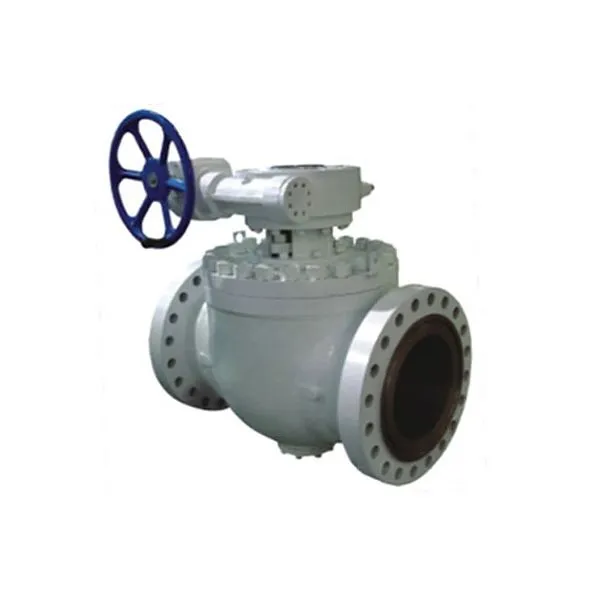
Top Entry Ball Valve
We promise to provide you with the fastest reply, the best price, the best quality, and the most complete after-sales service.
We use the latest technology and tools to deliver high quality services. Our team is well-versed in the latest trends and advancements in technology and uses them to provide the best results.


As mentioned earlier, the top-entry design makes maintenance and servicing a breeze. You can access the internal components quickly, reducing downtime and maximizing efficiency.
Top entry ball valves come in different materials and configurations, making them suitable for a wide range of applications, from corrosive fluids to high-temperature environments.
In some cases, having the ability to access and service the valve from the top can improve safety, especially in hazardous or hard-to-reach locations.

Accessing the valve from the top can be safer, especially in challenging environments or hard-to-reach locations. It eliminates the need for maintenance personnel to work in tight spaces or handle heavy valve components. The top entry design brings numerous benefits to maintenance and servicing. It enhances accessibility, reduces downtime, simplifies procedures, and allows for easier customization and upgrades.
A top entry ball valve consists of a valve body, a ball, a stem, and a sealing mechanism. The ball, which is typically made of corrosion-resistant materials, is positioned inside the valve body and has a through-hole in the center. The stem connects the ball to the actuator, which allows for opening and closing the valve.
When the valve is in the closed position, the ball is rotated to align the through-hole with the valve seat, creating a seal. This prevents the fluid from flowing through the valve. The sealing mechanism, usually a soft or metal seat, ensures a tight seal to prevent leaks.
To open the valve, the actuator rotates the stem, which in turn rotates the ball. As the ball rotates, the through-hole aligns with the flow path, allowing the fluid to pass through. The degree of opening can be adjusted by rotating the ball to control the flow rate.
Top entry ball valves can indeed be used in high-temperature applications.
The materials used in manufacturing top entry ball valves can withstand high temperatures, making them suitable for certain high-temperature applications. Common materials used include stainless steel, chrome molybdenum steel, and Inconel. These materials have excellent temperature resistance properties and can withstand temperatures well above the normal operating range of most fluid systems.
Sealing mechanisms in top entry ball valves are designed to handle high temperatures. Soft seals, such as PTFE or Grafoil, are often used in these valves, as they can provide a tight seal even at elevated temperatures. Metal seals, such as chrome steel or Inconel, are also available for higher-temperature applications.
The design of top entry ball valves allows for better heat dissipation. By having the valve body exposed at the top, heat can escape more easily, preventing overheating of the internal components. This helps maintain the integrity and performance of the valve in high-temperature environments.

Stainless Steel: Stainless steel is a popular choice due to its excellent corrosion resistance and mechanical properties. It is available in different grades, such as 304 and 316, which offer varying levels of corrosion resistance and temperature tolerance. Stainless steel is suitable for a wide range of fluid handling applications.
Chrome Molybdenum Steel: Chrome molybdenum steel, also known as chrome-moly steel, is a alloy that combines chrome and molybdenum. It provides enhanced mechanical strength and corrosion resistance compared to carbon steel. Chrome molybdenum steel is often used in high-temperature and high-pressure applications.
Inconel: Inconel is a nickel-based alloy known for its excellent resistance to corrosion and high temperatures. It can withstand extreme conditions and is commonly used in severe corrosive or high-temperature environments. Inconel is also resistant to creep and fatigue, making it suitable for long-term operation.
Hastelloy: Hastelloy is a nickel-chromium-molybdenum alloy that demonstrates superior corrosion resistance, especially in aggressive chemical environments. It is often used in applications involving acids, chlorides, and other corrosive fluids. Hastelloy is available in different grades, each suited for specific chemical resistance requirements.
PTFE (Polytetrafluoroethylene): PTFE is a fluoropolymer known for its low coefficient of friction and chemical resistance. It is often used as a seal material in top entry ball valves, providing a reliable seal even in corrosive or high-temperature fluids. PTFE seals are compatible with a wide range of chemicals and offer excellent sealing performance.
Graphite: Graphite is another material used in seal applications in top entry ball valves. Graphite has good chemical resistance and is suitable for handling corrosive fluids. It is also self-lubricating, which helps reduce friction and wear in the valve.
Cast Iron: Cast iron is a relatively inexpensive material that provides moderate mechanical strength and corrosion resistance. It is often used in low-pressure applications where cost is a consideration.


Corrosion Resistance: Top entry ball valves are often constructed using corrosion-resistant materials, such as stainless steel, chrome molybdenum steel, or Inconel. These materials offer excellent resistance to corrosive fluids, preventing rust, erosion, and chemical degradation. This helps ensure the long-term reliability and performance of the valve in corrosive environments.

Easy Maintenance: The top entry design of these valves allows for easy access to the internal components. This is beneficial in corrosive fluid handling applications as it allows for quick inspection, cleaning, and replacement of seals or other components if they become damaged or corroded. Regular maintenance helps prevent corrosion-related issues and extends the service life of the valve.
Non-sparking Materials
The materials used in manufacturing top entry ball valves should be non-sparking to minimize the risk of ignition. Common non-sparking materials include stainless steel, brass, and bronze. These materials help reduce the potential for sparks and ignition in explosive environments.
Explosion-proof Actuators
If the top entry ball valve is actuated using an electric motor or pneumatic actuator, it is crucial to use explosion-proof actuators to prevent the ignition of flammable gases or vapors. Explosion-proof actuators are designed to minimize the risk of explosion and are certified for use in explosive environments.
Bergamo Valve has strong technical force, advanced production technology, stable quality, making contribution to the development of chemical, petroleum, our smelting, electric power industry. Over the years, always adhere to "quality first, reputation first, prompt delivery, and thoughtful service" purposes, products sell well all over the country, by the user praise. All products are used GB, HB, API, BS, DIN, JIS and other domestic and foreign advanced standards of production,according to the terms of use,users can choose different fluorine materials,also undertake various non-standard valves, equipment design and manufacture, anti-corrosion equipment will give your business to provide the ideal, so bring your business significant economic benefits.

Q: What is the difference between a floating ball valve and a trunnion-mounted ball valve?
Q: What is the difference between a soft-seated and metal-seated top entry ball valve?
Q: What is the difference between a single-piece and two-piece top entry ball valve?
תגיות פופולריות:


